
Selected Work
A collection of service design projects shaped by research, systems thinking, and measurable impact.
Problem
Electronic Health Records (EHRs) are critical to delivering patient care, yet many physicians experience them as complex, unintuitive, and burdensome to use. Instead of supporting clinical workflows, these systems often introduce friction through poor information architecture, inconsistent interfaces, and inefficient task flows, contributing directly to increased administrative workload and physician burnout.
Research showed that core tasks such as order entry, patient documentation, and accessing patient information were particularly difficult, with usability issues ranging from unclear navigation to lack of error prevention and poor system feedback. Despite the importance of these tools, physicians’ input is often underrepresented in their design, resulting in systems that fail to align with real-world clinical needs and workflows.
Approach
The project followed a user-centred design process, beginning with secondary research into EHR usability and physician burnout, followed by quantitative and qualitative research with over 150 physicians. Surveys helped identify the most complex and problematic features, while follow-up responses provided deeper insight into user frustrations, workarounds, and unmet needs.
These insights informed the creation of detailed personas representing physicians’ goals, behaviours, and pain points. From there, ideation sessions explored a wide range of potential solutions, which were prioritised and translated into wireframes and an interactive prototype. The design incorporated accessibility best practices and focused on simplifying navigation, improving data visibility, and reducing cognitive load. Usability testing with 10 participants validated the solution, using System Usability Scale to measure effectiveness.
Outcome
The final prototype delivered a more intuitive and accessible EHR experience, designed to better align with how physicians think and work. Improvements such as clearer information hierarchy, streamlined workflows, and more flexible interaction patterns reduced complexity and made key tasks easier to complete, directly addressing the issues identified during research.
Usability testing resulted in a mean SUS score of 85, placing the solution in the highest usability category and indicating strong user acceptance. More importantly, the project demonstrated how a user-centred, research-driven approach can transform complex clinical systems into tools that actively support healthcare professionals, with the potential to reduce workload, improve efficiency, and contribute to better patient outcomes.
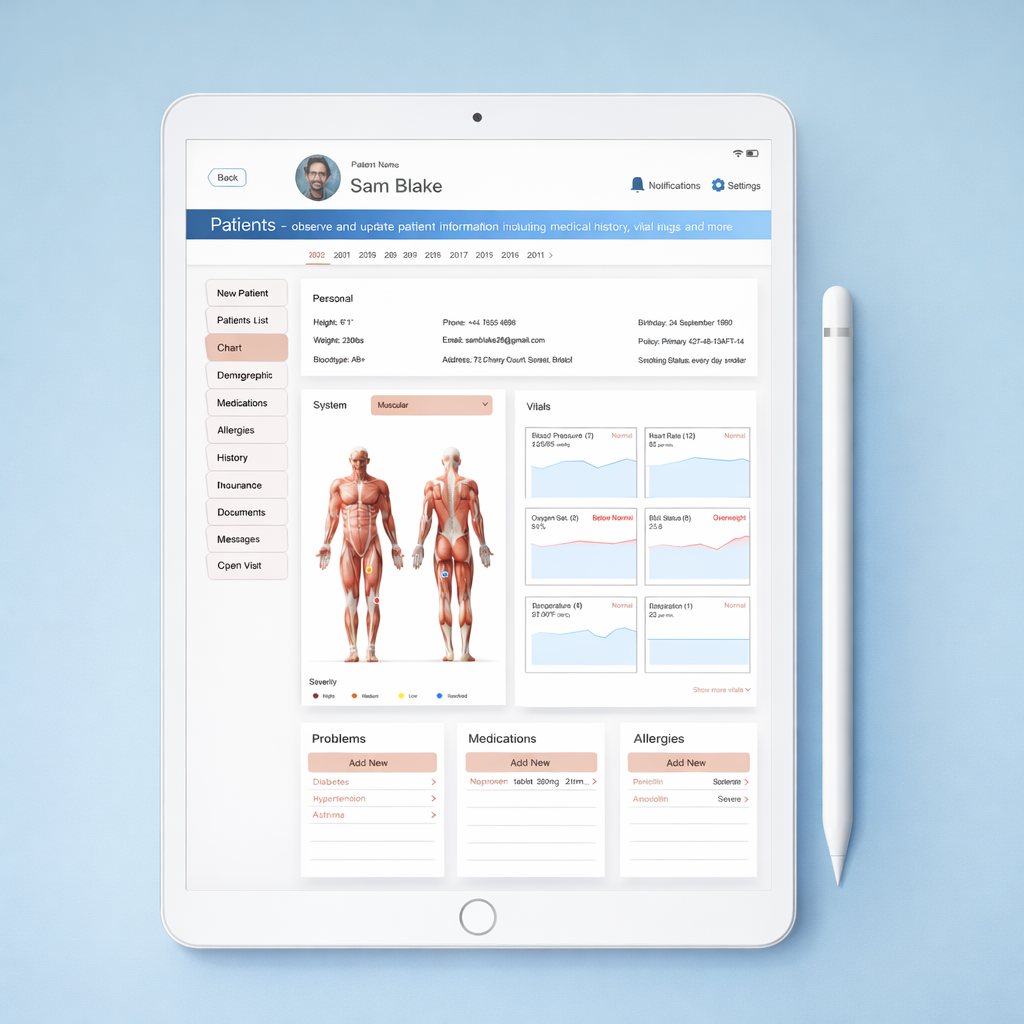
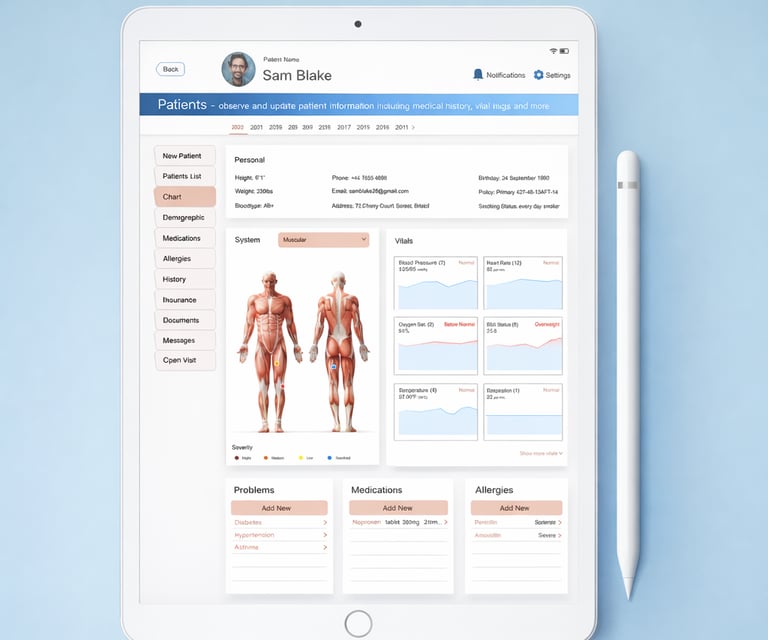
An Electronic Health Record (EHR) that cares
Designing a more intuitive and workflow-aligned Electronic Health Record experience to reduce physician burnout and enable greater focus on patient care.
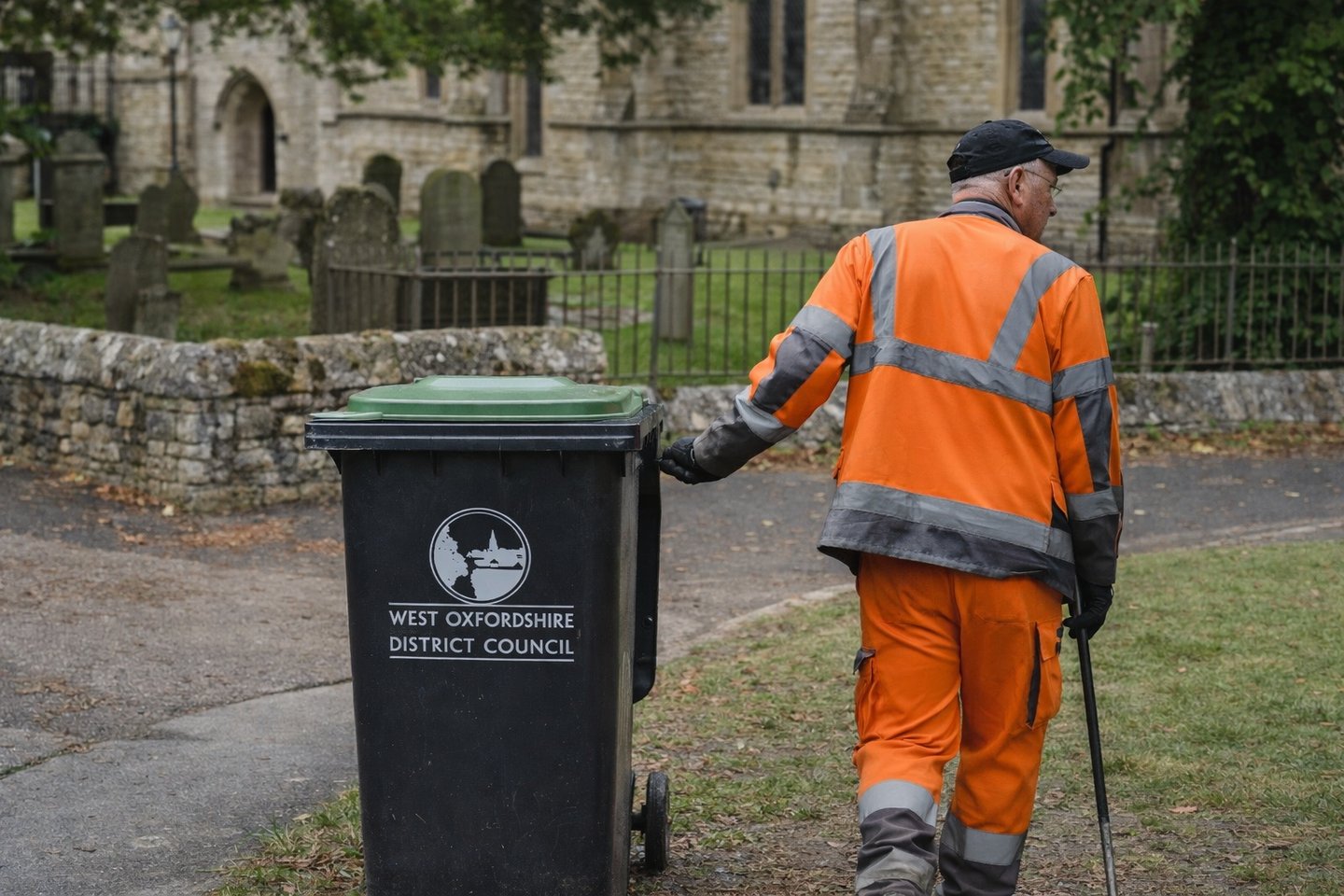
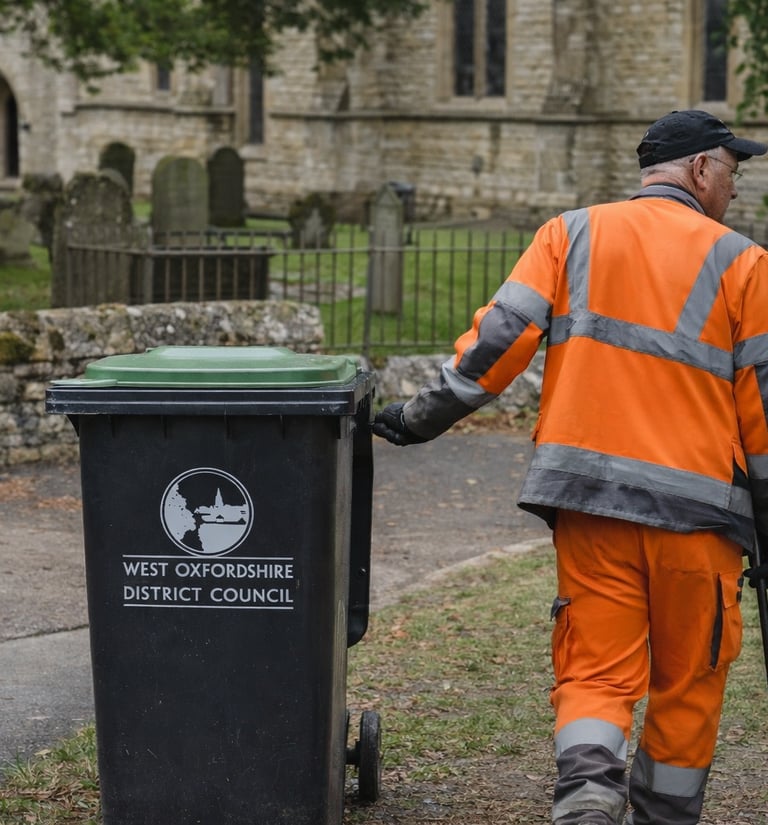
Sustainable waste solution
Reimagining West Oxfordshire District Council’s Business Waste and Recycling Service to increase commercial viability and create a sustainable model in the wake of COVID-19’s economic impact.
Problem
The council’s Business Waste and Recycling service was under increasing financial pressure, moving from minimal profitability to sustained losses, worsened by reduced demand following COVID-19. The service had historically relied on reactive engagement rather than proactive promotion, resulting in low visibility, limited customer acquisition, and weak positioning against competitors offering more flexible and digitally enabled services.
Operationally, the service was fragmented and difficult to use. Missed collections were reoccurring, with many failures linked to unclear processes such as procedures for presenting bins for collection. Some customers lacked awareness of key service information while dissatisfaction with reliability was high. Internally, inefficient digital touchpoints and manual processes reduced efficiency, highlighting a broader misalignment between how the service was designed and how it functioned in practice.
Approach
A service design approach was used to understand the service end-to-end, combining secondary research, data analysis, and competitive benchmarking to identify performance gaps and evolving user expectations. This was complemented by user research through surveys and interviews, which revealed that many issues stemmed from unclear communication and low visibility of service information rather than user behaviour alone.
Ethnographic research with collection crews provided insight into operational realities, uncovering inefficiencies, workarounds, and inconsistencies in areas such as bin design and supporting technology. These insights were synthesised into clear themes and mapped across the service, enabling the definition of three core objectives: business growth, service efficiency, and customer satisfaction. Collaborative workshops aligned stakeholders around these priorities, leading to the design and implementation of improvements across digital touchpoints, communication channels, and internal processes.
Outcome
The service shifted from a reactive and fragmented model to a more structured and user-centred approach, improving both performance and sustainability. Financially, this resulted in a 33% reduction in aged debt and a significant increase in Direct Debit adoption, improving cash flow and reducing administrative overhead. Operational efficiency improved through better alignment between service design and real-world use, supported by improved data quality and more effective use of technology.
Customer experience improved through clearer communication, more accessible digital journeys, and the introduction of multiple contact channels, reducing confusion and improving responsiveness. Service reliability increased as underlying causes of issues, such as missed collections and incorrect waste handling, were addressed through better guidance and clearer expectations. By the end of the project, the service had moved onto a positive trajectory, demonstrating early signs of profitability and a stronger foundation for long-term growth.
Optimising talent discovery
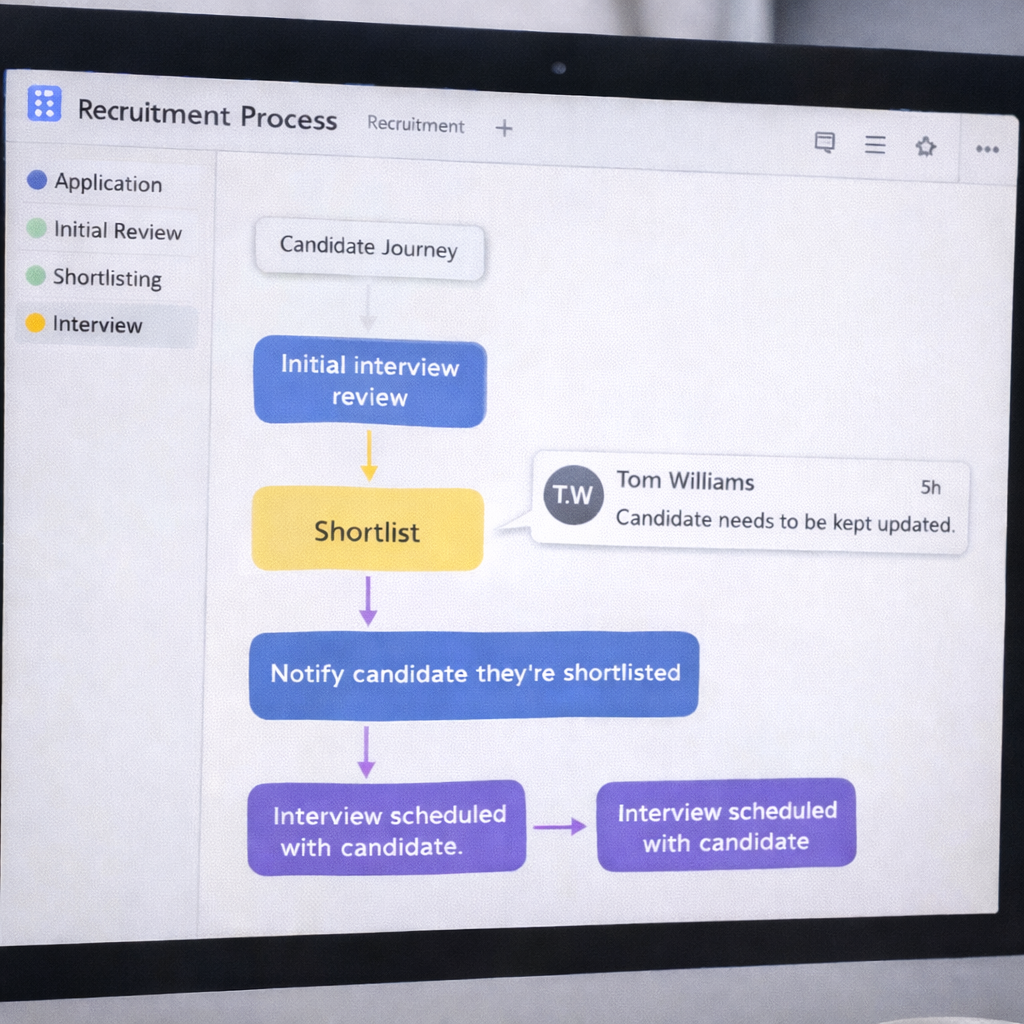
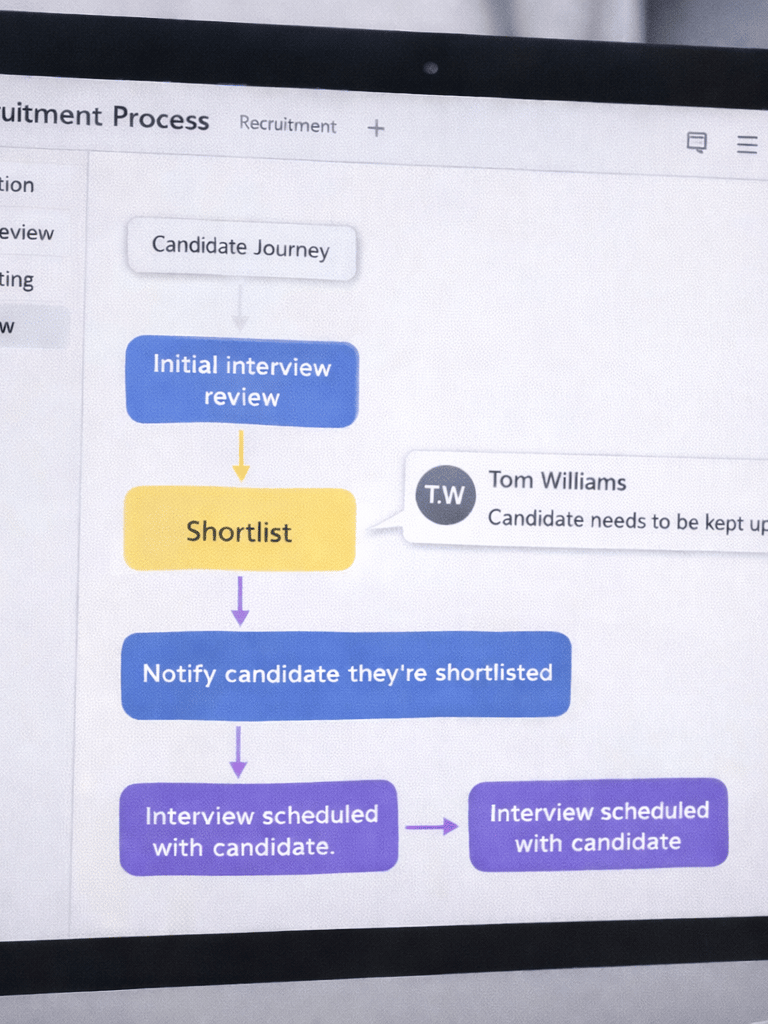
Redesigning a fragmented recruitment process by mapping the end-to-end journey and aligning HR, hiring managers, and support teams to create a more efficient, transparent, and continuously improving hiring experience.
Problem
The organisation lacked a clear, end-to-end understanding of its recruitment process, with no comprehensive or visual representation of how hiring worked across teams. As a result, responsibilities, dependencies, and decision points were fragmented, making it difficult to identify inefficiencies, allocate resources effectively, or ensure a consistent candidate experience.
The recruitment journey involved over 25 stakeholders across HR, finance, IT, and operational teams, creating complexity and reliance on individual knowledge rather than a shared system view. This led to duplicated efforts, delays in approvals, and inconsistencies in how processes were executed, ultimately impacting both operational efficiency and the organisation’s ability to attract and onboard talent effectively.
Approach
The work began by building a clear picture of the recruitment process as it currently operates, using an initial briefing to uncover available resources, key stakeholders, and practical constraints. Given the number of actors involved, the work focused on engaging stakeholders based on availability rather than strictly following process stages, ensuring broad coverage of insights across the organisation.
Through a series of interviews and workshops with hiring managers, recruiters, HR, finance, IT, and policy teams, I captured roles, responsibilities, dependencies, and pain points across the recruitment lifecycle. These insights were synthesised into a detailed service blueprint, mapping frontstage interactions, backstage processes, and supporting systems. The blueprint was iteratively reviewed with senior stakeholders, allowing for validation, refinement, and alignment before being formalised into a comprehensive handoff document that merged visual mapping with recommendations.
Outcome
The project delivered a comprehensive service blueprint that provided a shared, end-to-end view of the recruitment process, making previously invisible dependencies, inefficiencies, and gaps visible to stakeholders. This enabled clearer alignment across teams, improved understanding of roles and responsibilities, and created a foundation for more consistent and efficient service delivery.
The final output also included a set of prioritised recommendations, giving the organisation a practical roadmap for improving the recruitment process, reducing duplication, and enhancing the candidate experience. By consolidating stakeholder insights into a single, structured artefact, the work shifted the recruitment process from being fragmented and knowledge-dependent to something more transparent, collaborative, and easier to evolve over time.
Let's chat about your next design project.
Phone
07826 451774
© 2025. All rights reserved.
Social